
Reformation x Nara Smith: Big Brands Are Now Selling a Lifestyle, Not a Face
By Bryan Liao
There was once a time when brands chose ambassadors to amplify the spotlight — and the brighter the star, the stronger the halo. Traditional celebrity endorsements followed a simple formula: big names, cinematic lighting, and an untouchable “perfect idol” image.
The story always struck the same chord of “you want to be me, so you buy what I represent.” Think of Angelina Jolie, Anne Hathaway, or Beyoncé. That was the era when ads were meant to be divine and consumers were expected to gaze up in admiration.
But that system has changed. Younger audiences no longer buy into that kind of perfection, and it might be because we have spent far too long scrolling through filtered realities. Perfection feels exhausting now, and instead, we crave the quiet reassurance of something unedited. People don’t want to be preached to or idealized from a distance; they want to know that their idols are human too, with quirks, flaws, and small moments that feel real.
Today’s most meaningful collaborations aren’t built on fame, but rather familiarity. Brands are not chasing celebrities to represent an ideal persona. Instead, they’re partnering with real people whose lives reflect the values they want to stand for. And honestly, I find that shift comforting.
It is a relief to see brands finally lean into something real and imperfect instead of another unreachable fantasy. In this new landscape, influence is no longer about perfection; it’s about being believed. True influence now comes from a life that feels visible, credible, and emotionally aligned with its audience.
The collaboration between Nara Smith and Reformation captures this transformation perfectly. It translates the famed model and influencer’s slow-paced routines, vintage-inspired elegance, and minimal aesthetic into a capsule collection that moves effortlessly between home and the outside world. The collaboration takes her highly curated, idealized lifestyle, the one that usually feels filtered and out of reach, into something people can actually participate in. Through the clothing, her world becomes reachable, familiar, and emotionally relatable, and it transforms fantasy into something that feels possible. Her routines, home, and aesthetic are still far from what ordinary daily life looks like, but Reformation is trying to strategically place a small crack in an otherwise perfect lifestyle.
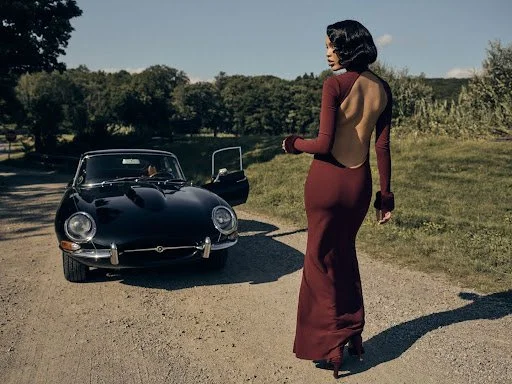
The campaign film brings this idea to life in the most unexpected way. Styled like an old-school noir, it shows Nara running down the highway, glancing nervously in the mirror as if someone’s following her. She’s dressed in a deep burgundy sequined Reformation slip dress, paired with long black gloves, which strike a balance between being elegant and yet effortlessly undone. She says she’s hiding a “big secret,” and for a moment, it feels like we’re watching a thriller —until the twist. She pulls into a drive-through, orders a burger, fries, and a milkshake, and casually admits that she’s not that into cooking after all. For someone who built her entire online presence around peaceful kitchen routines and picture-perfect meals, that line hits hard. But instead of breaking her image like the traditional perfectionist model would, it actually makes her more relatable. It’s that kind of honesty that makes people like her more, and they relish in this reminder that even the “domestic goddess of TikTok” sometimes grabs fast food on the way home.
That drive-through moment isn’t a real unraveling; it’s a carefully packaged flaw. It’s curated messiness, staged relatability, and the kind of gently crafted imperfection brands use to make a polished persona feel emotionally closer. It doesn’t make her less perfect; it just makes her perfect in a way that feels human enough.

Ultimately, I think that’s what makes the whole collaboration click. It’s not about maintaining a flawless aesthetic; it’s about living in it. Reformation and Nara both understand that today’s consumers don’t want to admire perfection from afar, but rather, they want to recognize themselves in the imperfection.
We have to admit that it’s clever, but also refreshingly human. By breaking her own persona a little, Nara ends up reinforcing it more powerfully. She becomes someone you trust, not just someone you follow. That’s the shift this whole campaign captures so well: the new power of being believable in a world obsessed with being perfect.
If you think about it, this shift is really about emotion, not the aesthetic. Maybe it’s because we’ve spent too many years scrolling through picture-perfect feeds, subconsciously comparing ourselves to every filtered post. Now, we crave the relief of something unedited, something that reminds us we are not alone in our flaws, and when audiences feel something real, they remember it.
That is why campaigns like Nara Smith x Reformation stand out. It’s not the lighting, styling, or the clothes themselves. It’s that tiny human moment, like ordering a burger at the drive-through, that makes people smile and say, “Same!” That moment of shared honesty becomes the hook.
This emotional shift also alters how big brands build trust. In the old model, trust was derived from authority, where big budgets, famous names, and prestige were currency for conviction. Now, trust comes from vulnerability, relatability, humor, and imperfection. The big brands that win people over are the ones that make them feel like they are not being sold something, but rather being let into a branded world.
Let’s take a look at Zara. Zara leans into a kind of realness that’s already happening in people’s everyday lives. Their best-performing content doesn’t come from celebrities or famous influencers; it comes from micro-creators. For example, Rosa Diana, who has only around 3.9k followers and posts simple Zara try-ons from her bedroom or a random corner of her apartment. Her videos look exactly like what any of us would film on a normal day, which, honestly, is the whole point. Nothing about these videos is polished or staged to feel relatable; they just are. And weirdly, that rawness is exactly what makes people trust what they’re seeing because it looks close enough to their own reality.

These campaigns work well because they touch something that actually feels “human”. They remind us that beauty and lifestyle are everyday habits, small choices, and moments that build who we are. Both Reformation and Zara get that. They know that what people buy now isn’t just about how something looks, but about what it says about them. A purchase feels right the moment someone thinks, “Yeah, that’s me.”
Big names, glossy budgets, and flawless imagery are no longer enough. The new secret ingredient to winning customers’ hearts? Don’t try to sell them something. Make them feel like they’re part of it.